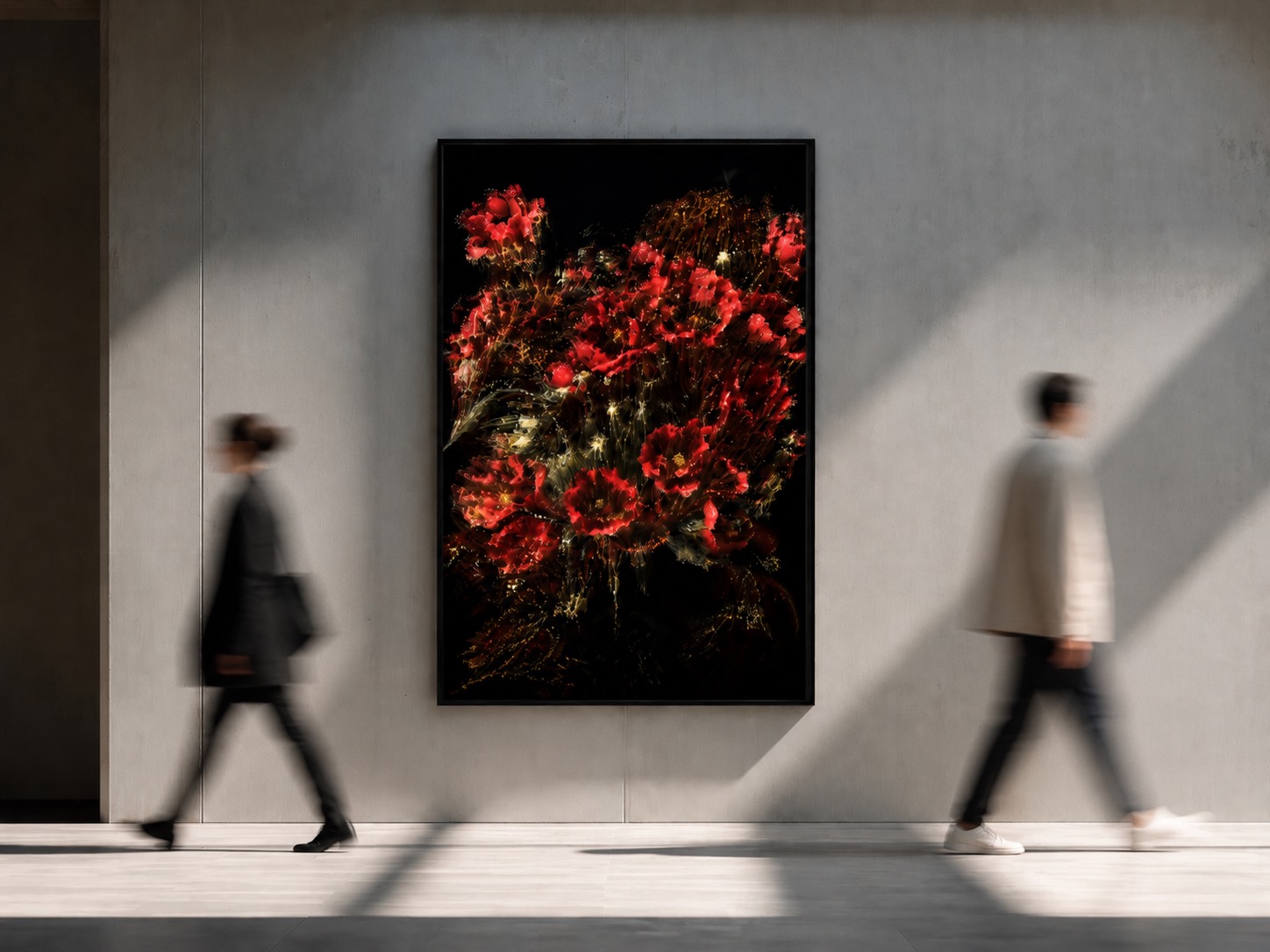
Westfield Brandspace. The visualiser art that earned the canvas its premium price.
The work that runs when nobody’s bought the slot. It is also, for prospect brands walking past during sales meetings, the most-watched content on the canvas.
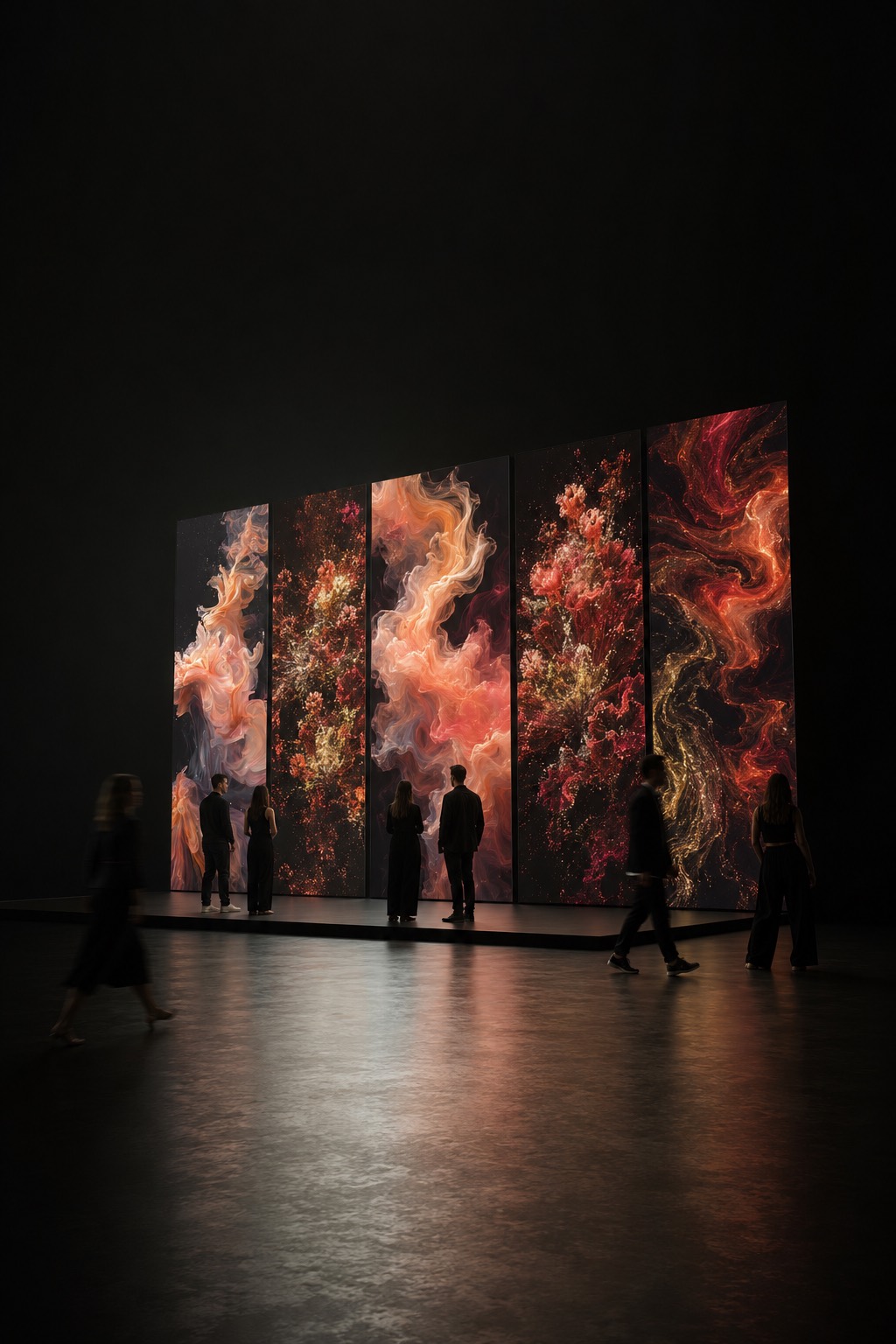
Westfield Brandspace operates premium DOOH inventory across the Westfield centre network, the Pitt Street Mall screens are its flagship. Sydney CBD foot traffic at lunchtime, several thousand pass-through impressions per hour, several stories of cinematic-format LED. The brief was for a library of visualiser art content to run during unsold inventory windows. The internal framing was defensive: filler that doesn’t embarrass the canvas.
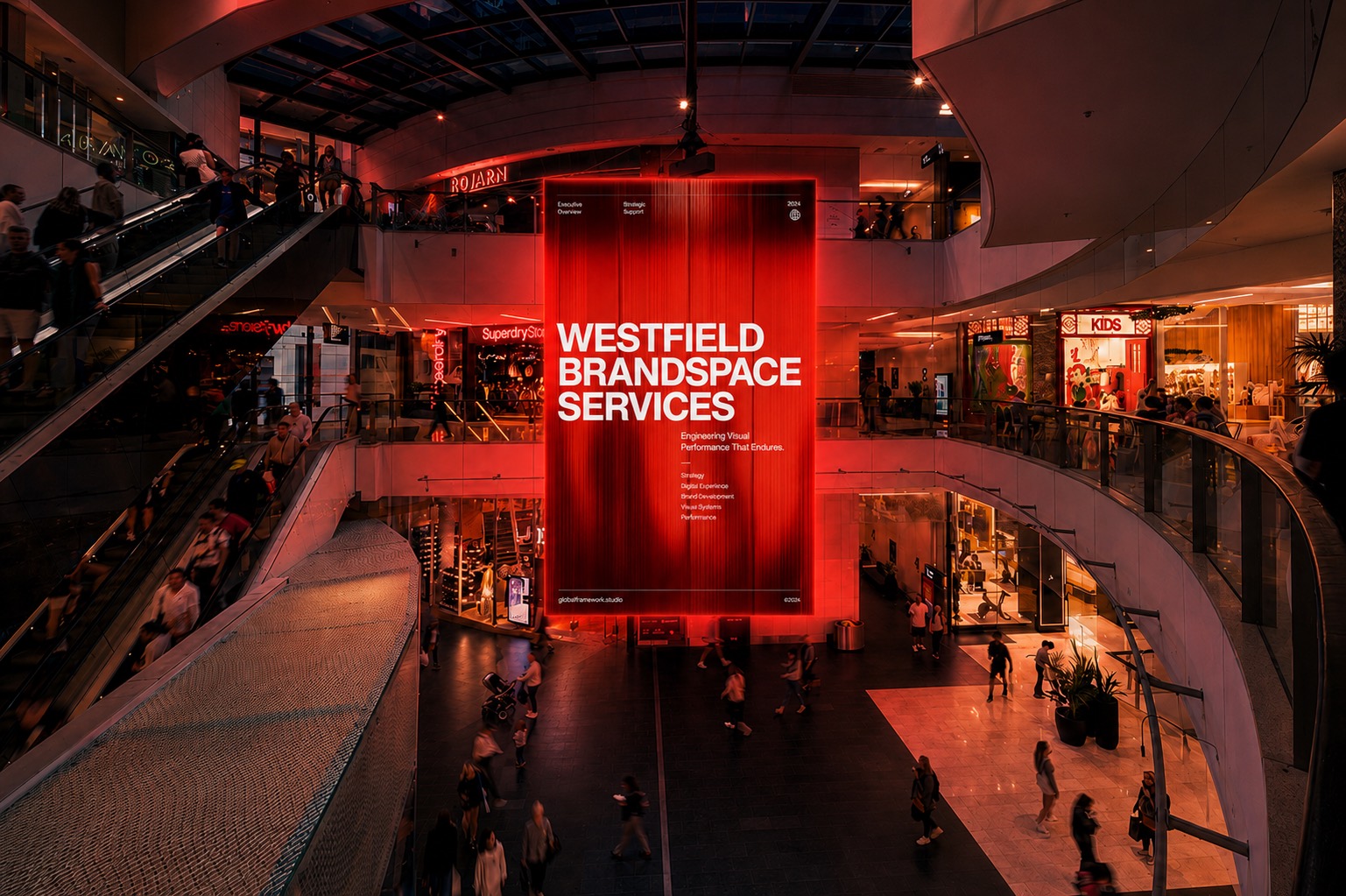
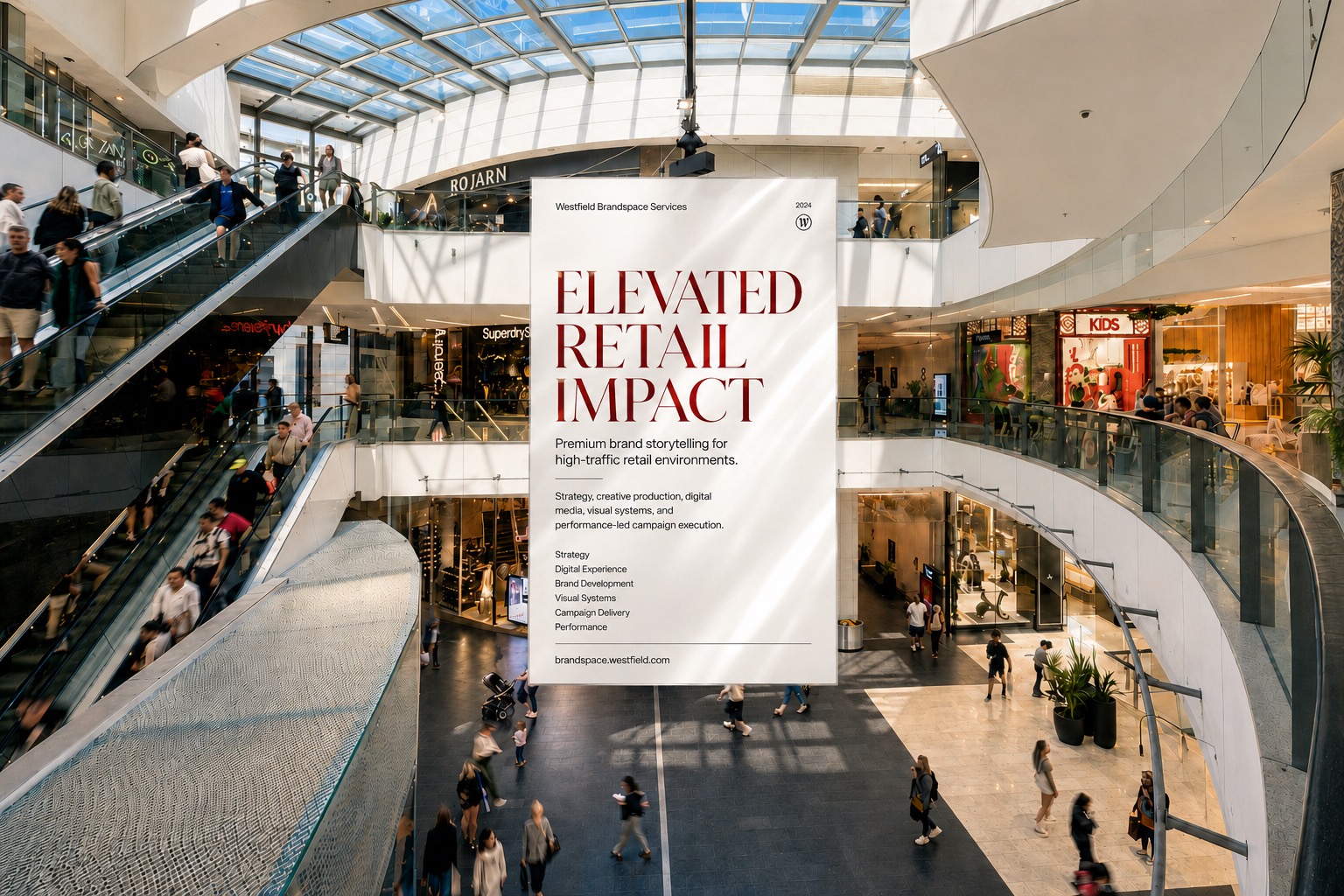 Hover for daylight
The brief
Mid-2023. Westfield Brandspace operates premium DOOH inventory across the Westfield centre network, the Pitt Street Mall screens are its flagship. Sydney CBD foot traffic at lunchtime, several thousand pass-through impressions per hour, several stories of cinematic-format LED. The brief was for a library of visualiser art content to run on the screens during unsold inventory windows. The internal framing was defensive: filler that doesn’t embarrass the canvas. The previous filler was stock motion graphics rotating on a four-piece loop, and the sales team had quietly stopped routing prospect walkthroughs past Pitt Street during the slow windows.
The audit
The first two weeks we didn’t open After Effects. We sat with the Brandspace sales team, the Pitt Street operations team, and three brand-side prospects currently weighing the inventory. The brief had described a defensive problem, manage the embarrassment. The audit said the problem was offensive. Visualiser content ran more often than any sold campaign on these screens; it was the most-watched content on the canvas, both for foot-traffic impressions and for prospect walkthroughs. The sales team wasn’t dodging Pitt Street because the technology was broken. They were dodging it because what played when the inventory wasn’t sold was undermining the premium-price pitch they’d just made in the meeting room. Filler wasn’t the problem to manage. Filler was the product.
The work
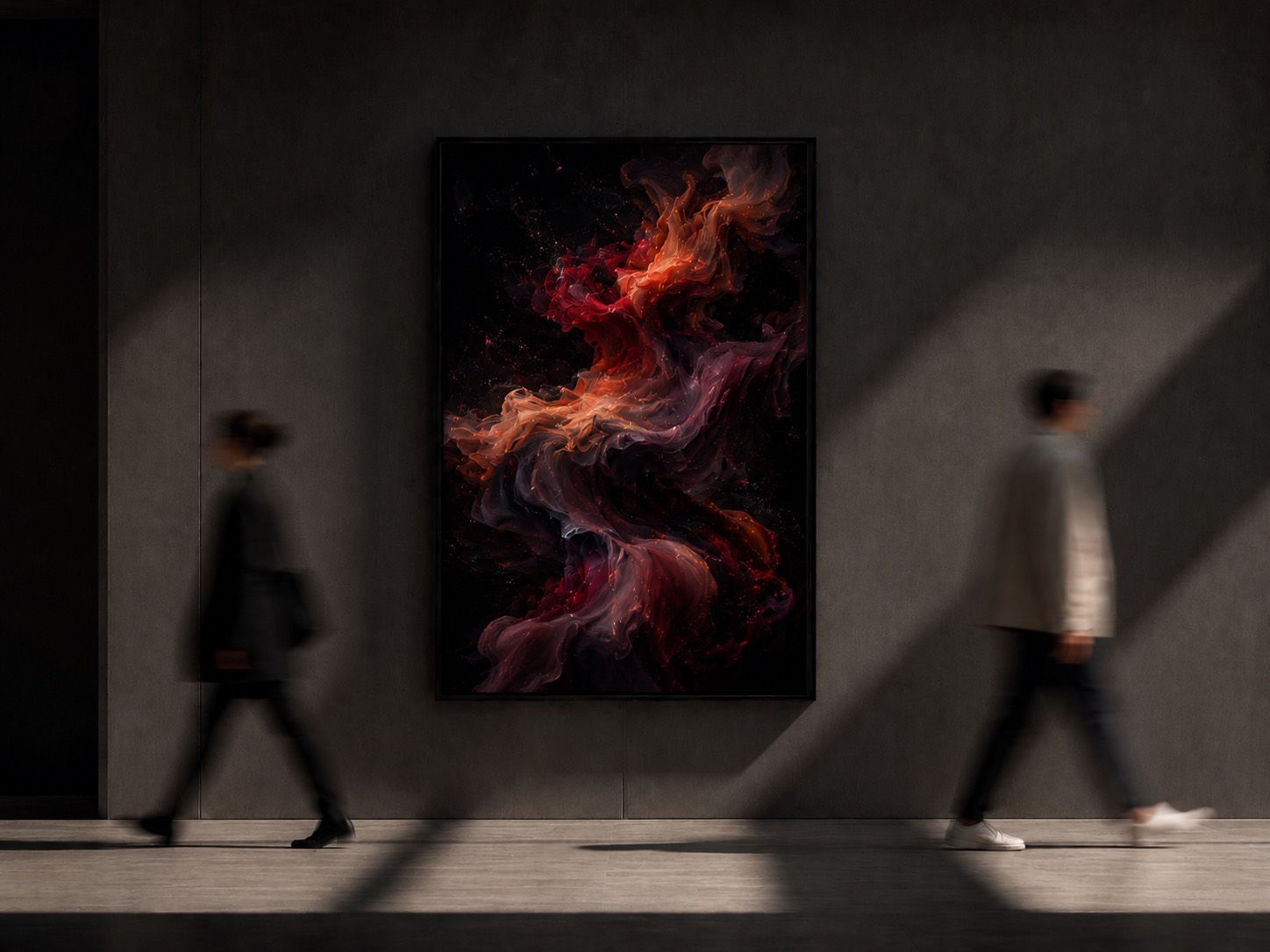
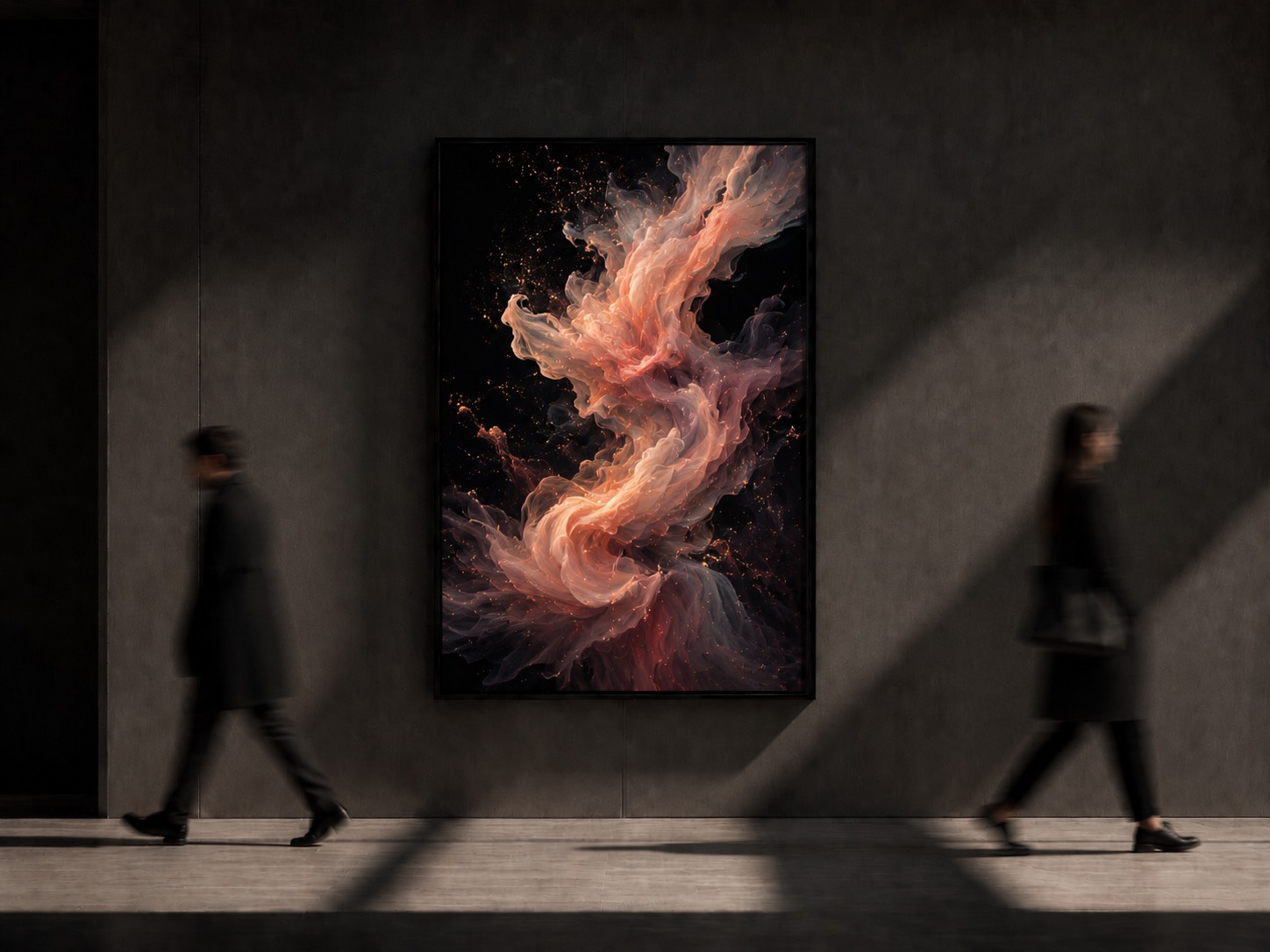
We designed and produced fourteen atmospheric visualiser pieces, sequenced into a system. Each piece was thirty to ninety seconds long, looped seamlessly, and engineered around three constraints the audit had surfaced. First, sound-off: every piece carried its full impression with no audio, because the canvas plays silent and any creative that depends on audio dies on this format. Second, three-second hook with thirty-second sustain: most pass-through impressions resolve in three to five seconds; the work needed to land an atmospheric impression in that window and reward a longer dwell without requiring it. Third, time-of-day aware: morning, midday, late-afternoon, and evening variants tuned to the pedestrian energy in front of the screens at each window. The library shipped with rotation logic that pulled from the right variant set based on screen-clock and traffic-rate signals.
What we deliberately did not build
The original brief had specified a Brandspace logo bumper between pieces, three seconds of brand identity to “make the work earn its keep for the host.” We declined. The moment visualiser art bumps into a brand mark, it stops being ambient art and becomes another ad, and the premium-canvas pitch the work was designed to support evaporates. We also declined the cinematic-narrative direction the agency producers initially favoured, short-film vignettes with character and arc. The audit said dwell time was three to five seconds, not thirty; narrative work would be invisible to ninety-five per cent of the audience. We produced atmospheric work optimised for the impression that actually happens, not the one we wished happened.
“We briefed a filler problem. You handed back a sales asset. The next quarter’s prospect walkthroughs ran straight through Pitt Street.”
, Tom Lazaro, Head of Creative Partnerships, Westfield Brandspace
The result
Eighteen months on, Pitt Street’s premium-tier yield had held against a softening DOOH marketplace where comparable network averages dropped meaningfully. Sales-team prospect-walkthrough routing returned to Pitt Street as a default for category-leading clients, not a window-of-availability. Brand-side commissions in the same atmospheric register increased, the visualiser system reset what good looked like on the canvas, and at least four major sold campaigns through 2024 commissioned custom work that mirrored its constraints (sound-off, three-second hook, atmospheric not narrative).
We’d attribute part of these outcomes to the work and part to honest confounds. Sydney CBD pedestrian traffic recovered through 2023 and 2024 from its post-COVID lows, lifting impression numbers across the inventory regardless of what played. The Brandspace sales team’s prospecting tactics evolved in the same window, premium positioning was being relearned across their organisation, and the visualiser library landed inside that broader shift, not outside it.
Closing
The takeaway: in any media business, the content that fills the gaps tells your customers what your inventory is worth. The unsold moments aren’t a defensive problem. They’re the longest-running showreel you have. Audit your defaults. Most premium positioning dies in the gaps the sales deck doesn’t mention.